

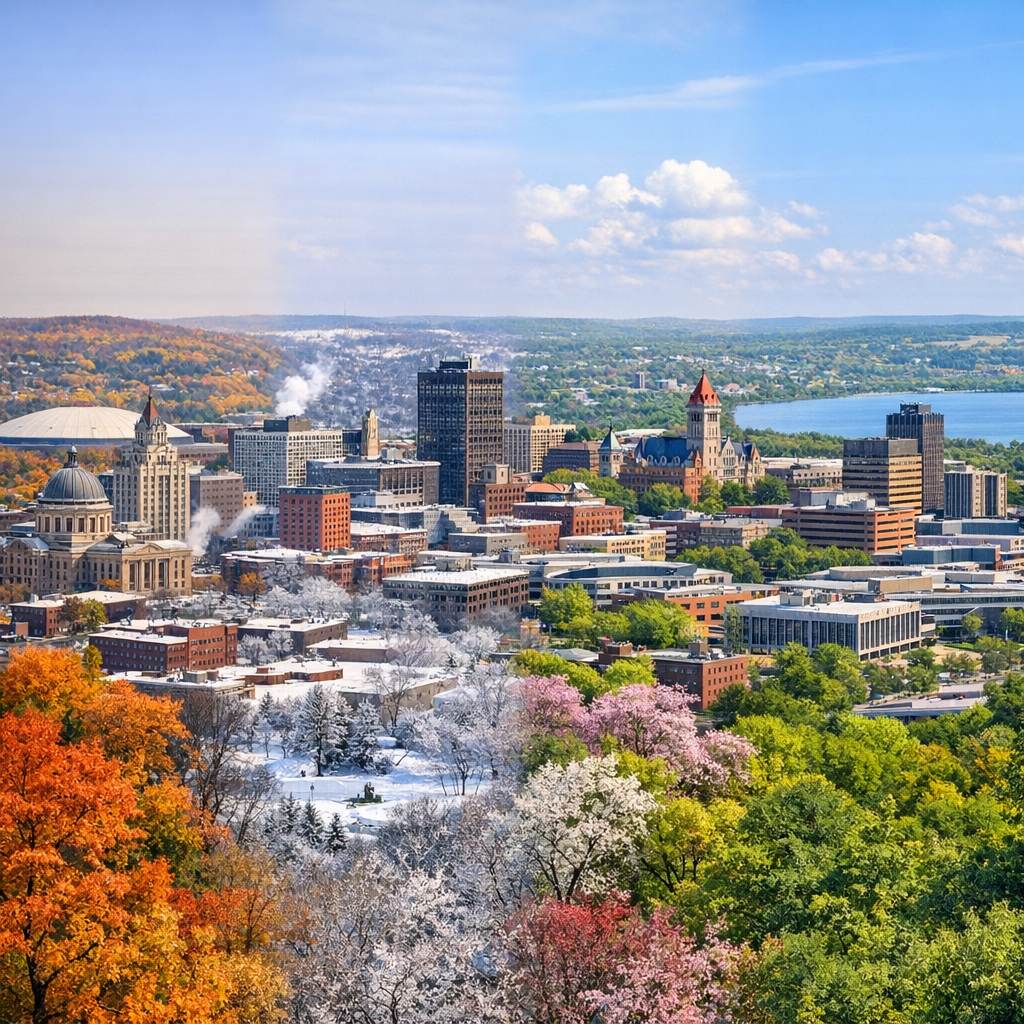
Syracuse, New York, experiences a diverse range of weather conditions throughout the year, characteristic of a humid continental climate. This means residents encounter warm summers and cold, snowy winters, each bringing its own set of challenges and opportunities.
Seasonal Overview
Winter
Winters in Syracuse are notably cold and snowy. Average high temperatures in January hover around 32°F (0°C), with lows dipping to 17°F (-8°C). The city is renowned for its substantial snowfall, averaging approximately 115.6 inches annually, making it one of the snowiest metropolitan areas in the United States. This heavy snowfall is primarily due to lake-effect snow from nearby Lake Ontario and nor’easter storms from the Atlantic Ocean. Residents should be prepared for frequent snowfalls and ensure their homes and vehicles are winter-ready.
Spring
Spring brings a gradual warming trend. By April, average high temperatures reach about 56°F (13°C), with lows around 36°F (2°C). This season is marked by increased rainfall, averaging 3.75 inches, which contributes to the blooming of local flora. It’s an excellent time for residents to engage in outdoor activities and enjoy the city’s parks and green spaces.
Summer
Summers are warm and partly cloudy. July, the warmest month, sees average highs of 82°F (28°C) and lows of 63°F (17°C). The season also brings increased humidity and occasional thunderstorms. Residents often take advantage of the warm weather by participating in outdoor festivals and visiting nearby lakes.
Autumn
Autumn is characterized by cooler temperatures and vibrant foliage. By October, average highs are around 60°F (16°C), with lows near 42°F (6°C). This season is relatively wet, with average precipitation of 4.07 inches. It’s a popular time for hiking and enjoying the scenic beauty of the changing leaves.
Environmental Initiatives
Recognizing the challenges posed by its climate, Syracuse has undertaken several initiatives to promote sustainability and environmental resilience. The Sustainable Syracuse Initiative aims to engage the community in reducing carbon footprints and mitigating climate change effects. Additionally, the Onondaga Lake Conservation Corps works to restore and sustain the Onondaga Lake watershed, enhancing wildlife habitats and promoting environmental stewardship.
Understanding Syracuse’s climate is essential for residents to navigate daily life and participate in community efforts toward sustainability. By staying informed and engaged, we can collectively enhance our city’s resilience and quality of life.