

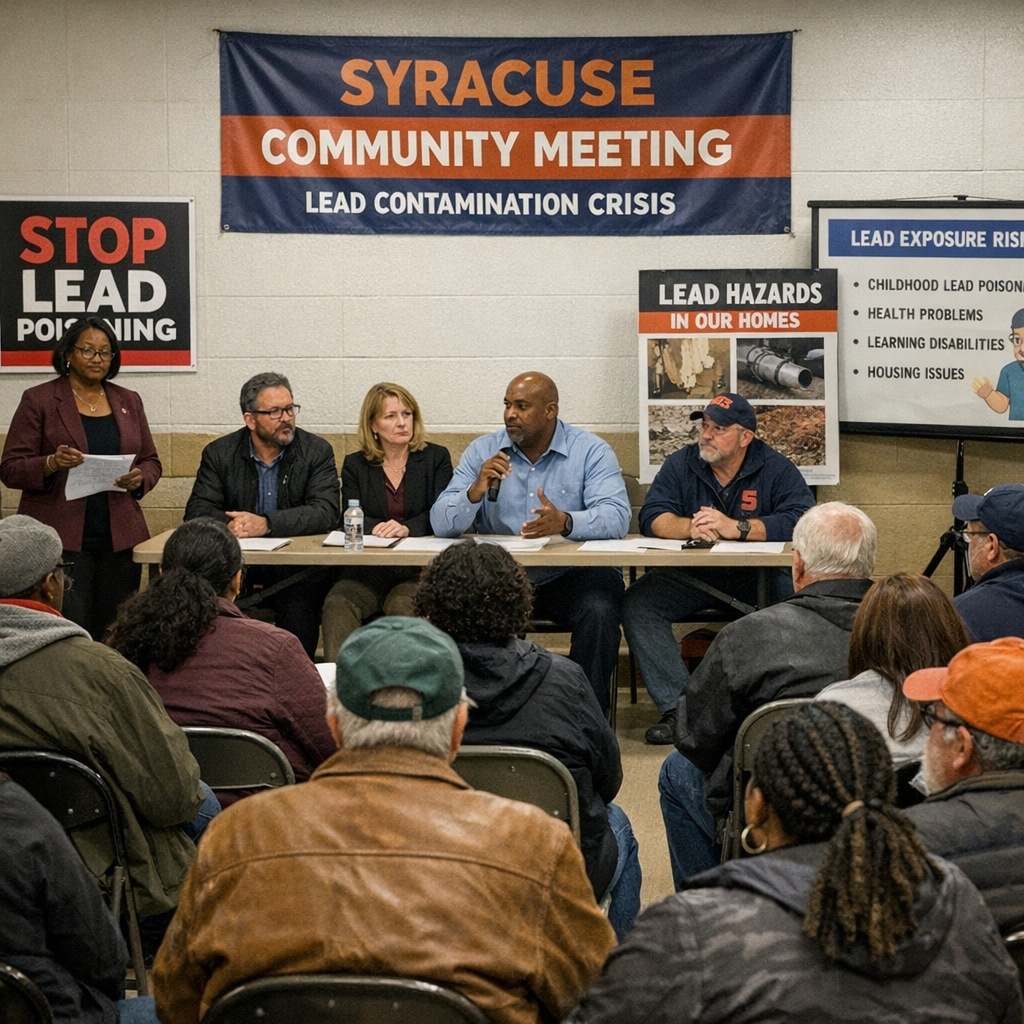
Syracuse continues to grapple with a significant lead contamination issue, affecting both its water supply and housing infrastructure. This crisis poses serious health risks, particularly to children, and has spurred community organizations to advocate for more effective interventions.
Lead Contamination in Water and Housing
The city’s aging infrastructure includes numerous lead service lines and older homes with lead-based paint, both primary sources of lead exposure. In 2025, an expert analysis revealed that over 14,000 homes in Syracuse are at high risk for lead-tainted water, challenging previous city claims of compliance with safety standards. This report highlighted ongoing failures to adhere to state and federal drinking water regulations, underscoring the need for immediate action. [Source]
Community Advocacy and Legal Actions
In response to the crisis, local organizations such as Families for Lead Freedom Now have been at the forefront of advocacy efforts. In July 2025, this group, along with partners, filed a legal petition urging the U.S. Environmental Protection Agency (EPA) to compel the city and state to address the lead contamination issue. The petition emphasized the prolonged exposure of residents to unsafe drinking water and called for federal intervention to ensure compliance with the Safe Drinking Water Act. [Source]
Health Impacts and Disproportionate Effects
Lead exposure is particularly harmful to children, leading to developmental delays and other serious health issues. In 2021, data indicated that over 11.6% of Black children in Onondaga County had elevated blood lead levels, compared to 2% of white children, highlighting significant racial disparities in exposure. This underscores the urgent need for targeted interventions to protect vulnerable populations. [Source]
Moving Forward
Addressing Syracuse’s lead crisis requires a multifaceted approach, including replacing lead service lines, remediating lead-based paint in homes, and ensuring strict enforcement of safety regulations. Community organizations continue to play a crucial role in advocating for these changes, aiming to safeguard the health and well-being of all residents.