

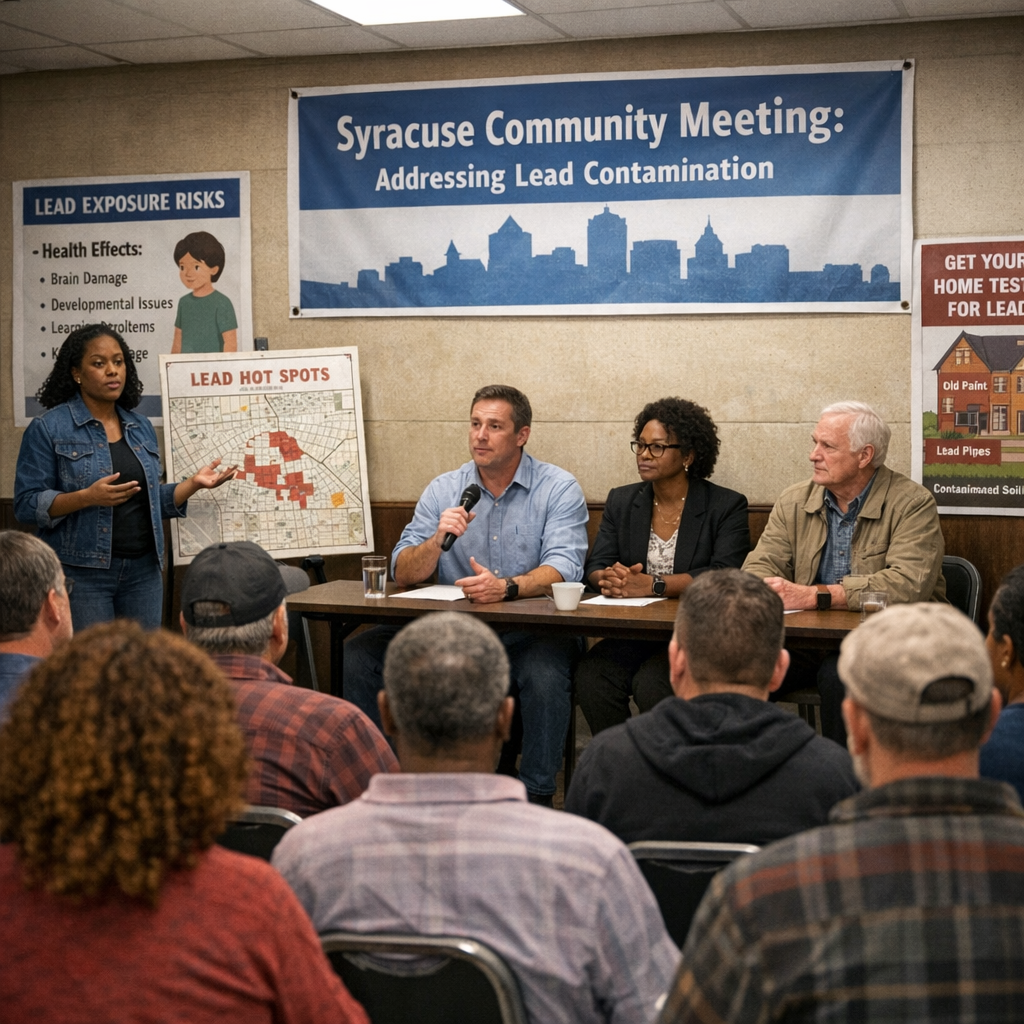
Syracuse continues to grapple with a significant lead contamination issue, affecting numerous residents, particularly children. Despite existing regulations, enforcement gaps have left many vulnerable to lead exposure.
Community Advocacy and Reports
Organizations like Families for Lead Freedom Now and Legal Services of Central New York have been at the forefront, highlighting the severity of the crisis. Their report, “Falling through the Cracks,” reveals that many landlords fail to register properties, resulting in missed lead inspections mandated by the 2020 ordinance. This oversight disproportionately impacts children of color in neighborhoods with high poverty levels. In 2023, 9% of tested children in Syracuse had elevated blood lead levels, with Black children in Onondaga County being more affected than their white counterparts. Source
Lead in Drinking Water
Beyond housing, lead contamination extends to the city’s drinking water. An expert analysis indicates that over 14,000 homes are at high risk due to lead service lines. The report questions the city’s compliance with state and federal drinking water standards, suggesting that the issue is more widespread than officials have acknowledged. Source
Community Initiatives
In response, community members are organizing to combat the crisis. Advocacy groups are ensuring that affected voices are heard, emphasizing the importance of grassroots organizing in addressing public health challenges. Source
City’s Response
The City of Syracuse has initiated the Syracuse Housing Strategy, aiming to improve housing conditions and address issues like lead contamination. This multi-year framework focuses on analyzing the housing market and developing responsive strategies to meet the city’s needs. Source
While these efforts are steps in the right direction, the lead crisis in Syracuse underscores the need for continued vigilance, community engagement, and robust enforcement to ensure the health and safety of all residents.