

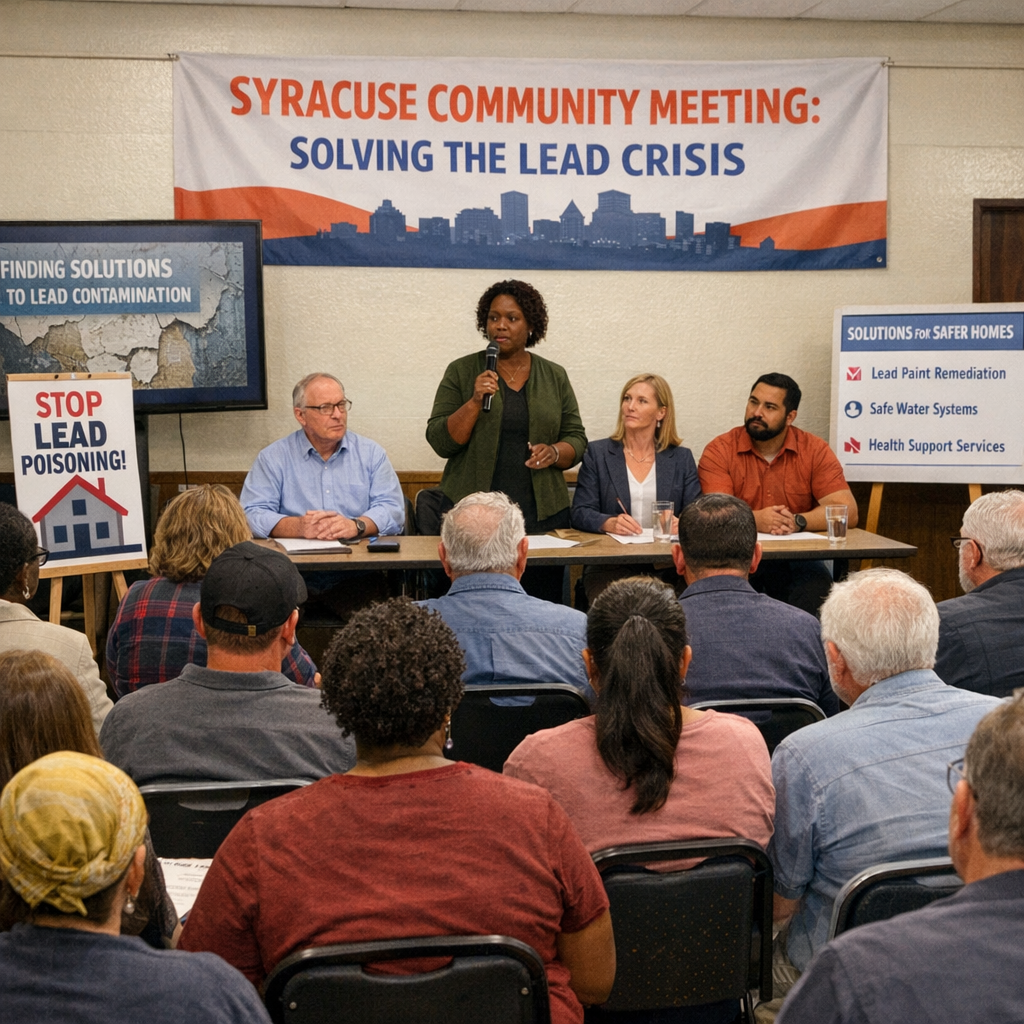
Syracuse, New York, is confronting a serious lead contamination crisis affecting both its water supply and housing infrastructure. The city’s aging housing stock, with many homes built before the 1978 ban on lead-based paint, and numerous lead service lines contribute to elevated lead levels, posing significant health risks to residents.
Community Initiatives
In response, local organizations have mobilized to address this public health emergency. Families for Lead Freedom Now, for instance, has been instrumental in advocating for affected residents, ensuring their voices are heard in policy discussions. Their efforts highlight the importance of grassroots organizing in tackling environmental health issues.
Additionally, the Community Ambassadors program in Syracuse has been working to support residents in securing stable housing. This initiative focuses on connecting tenants and small homeowners with resources to improve living conditions, thereby reducing lead exposure risks.
Challenges and Advocacy
Despite these efforts, challenges persist. Reports indicate that enforcement gaps in Syracuse’s lead ordinance leave many residents vulnerable. A significant number of landlords have failed to register their properties, resulting in missed lead inspections and continued exposure risks.
Furthermore, analyses have revealed that the city’s water supply has lead levels higher than those found in Flint, Michigan, during its water crisis. This alarming data has prompted calls for emergency responses from both city and state officials to ensure safe drinking water for all residents.
Moving Forward
Addressing Syracuse’s lead crisis requires a multifaceted approach, including stringent enforcement of housing regulations, comprehensive water infrastructure improvements, and sustained community engagement. The collaborative efforts of local organizations and residents are crucial in advocating for policies that prioritize public health and environmental justice.