

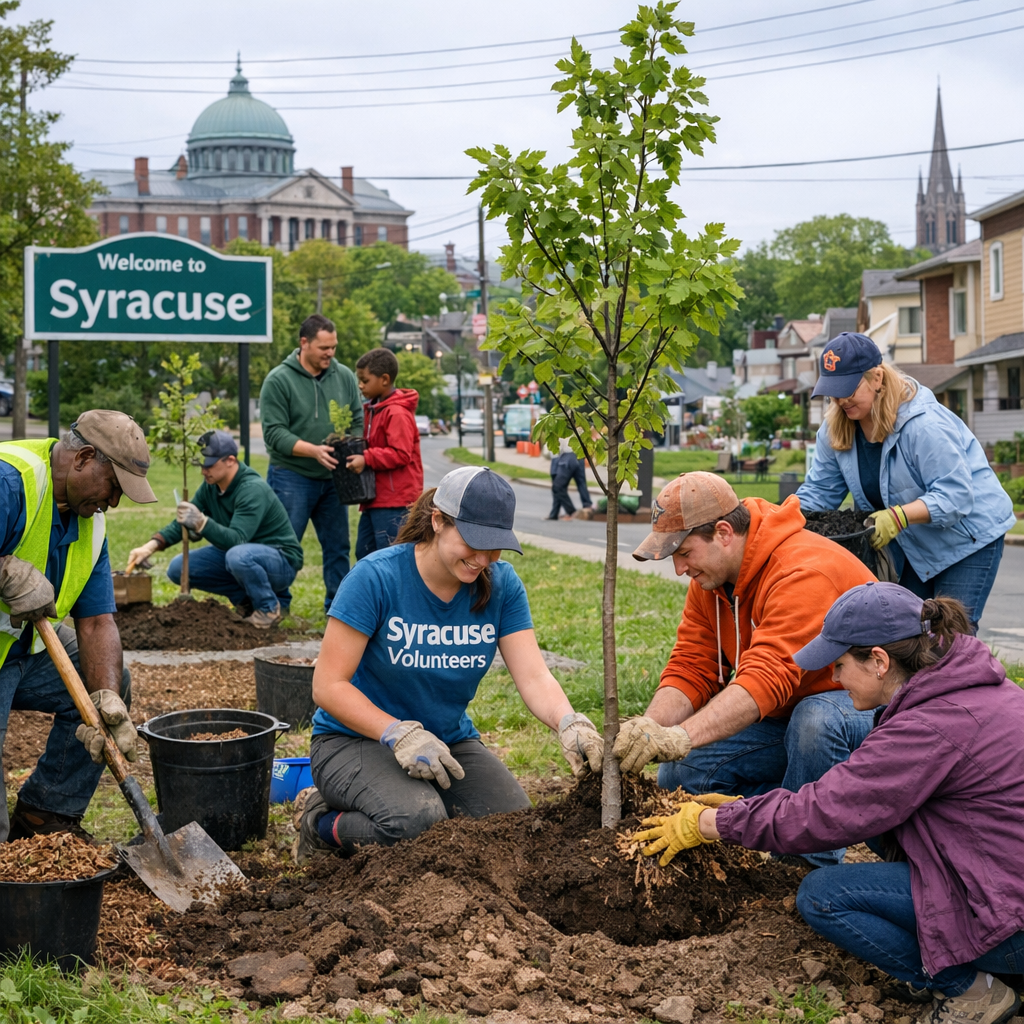
As climate change continues to impact communities worldwide, Syracuse is taking proactive steps to address environmental challenges and promote sustainability. Through a combination of community engagement, strategic planning, and collaborative efforts, the city is working towards a greener future.
Community-Led Environmental Initiatives
Local organizations are at the forefront of Syracuse’s environmental efforts. The Onondaga Environmental Institute (OEI) educates youth about environmental justice, aiming to inspire future environmental leaders. Their programs focus on empowering residents from neighborhoods facing environmental challenges, fostering a sense of stewardship and community involvement.
Similarly, The Environmental Action Lab (TEAL) is dedicated to reconnecting people with their environment through stewardship and sustainable development. TEAL’s projects, such as the Westside Eco-Farm, address food insecurity by providing fresh produce and educational opportunities, while initiatives like Restoring Onondaga Creek focus on habitat restoration and community education.
City’s Strategic Climate Planning
The City of Syracuse has demonstrated a strong commitment to sustainability through various initiatives. In 2025, the city launched the Sustainable Syracuse Initiative, aiming to engage and empower the community to reduce carbon footprints and mitigate climate change effects. This comprehensive approach includes developing a Climate Action Plan that outlines strategic avenues for climate action and methods for implementation.
In 2025, Syracuse achieved bronze certification from the New York State Climate Smart Communities program, recognizing the city’s efforts in reducing greenhouse gas emissions and improving community resilience. This certification highlights Syracuse’s leadership in climate mitigation and adaptation.
Educational and Research Contributions
Academic institutions in Syracuse play a pivotal role in advancing environmental sustainability. The Syracuse University Environmental Finance Center (SU-EFC) has been a national leader in environmental infrastructure funding for over 30 years, assisting communities in developing projects and navigating funding landscapes. Additionally, the Syracuse Center of Excellence in Environmental and Energy Systems collaborates with over 200 entities to create innovations in indoor environmental quality, clean energy, and water resource management.
Understanding Climate Risks
Recognizing the specific climate risks facing Syracuse is crucial for effective planning. The city is projected to experience increased risks from precipitation, heat, and drought. For instance, the number of days with temperatures above 89.1ºF is expected to rise from about 7 days in 1990 to approximately 33 days by 2050. Understanding these projections enables the community to develop targeted strategies to mitigate these risks.
Through collaborative efforts between the city government, local organizations, and academic institutions, Syracuse is actively addressing climate change challenges. By fostering community engagement and implementing strategic plans, the city is paving the way for a sustainable and resilient future.