

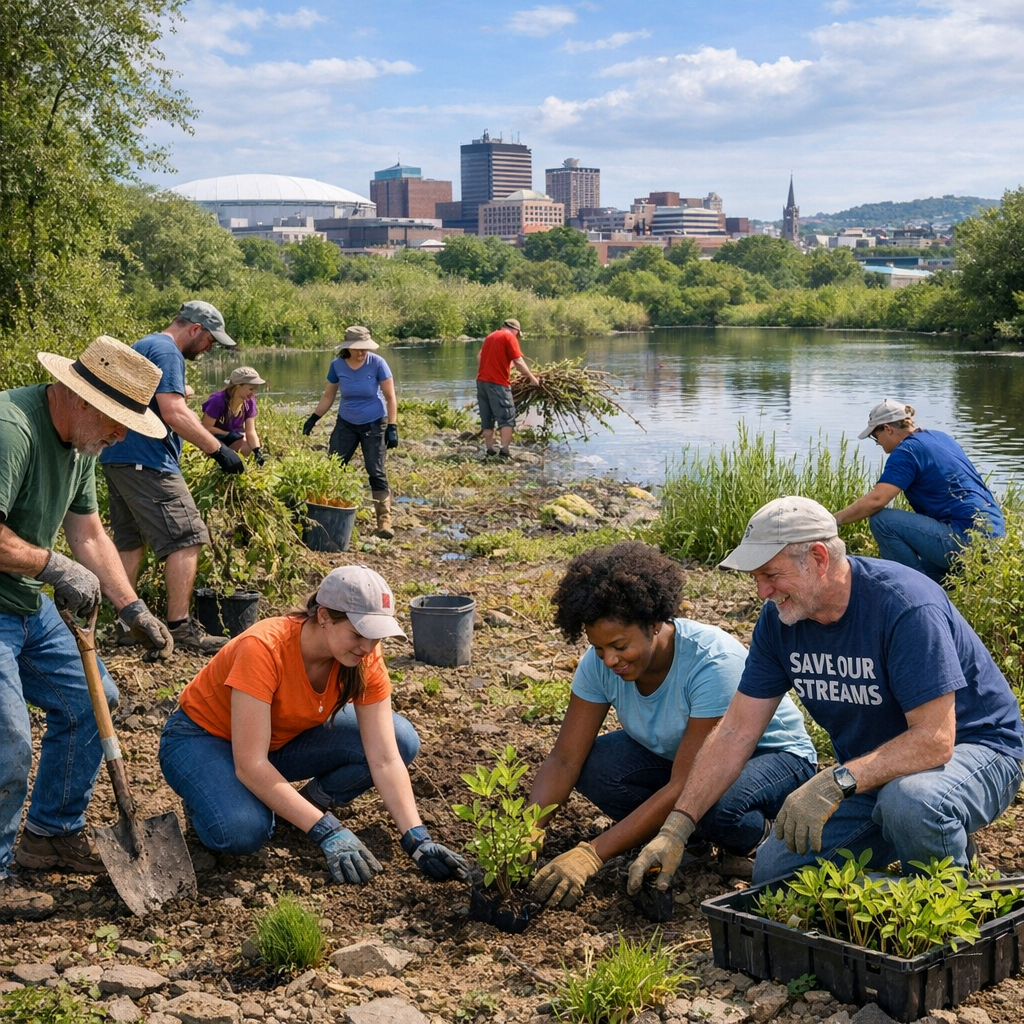
As climate change continues to impact communities worldwide, Syracuse is taking proactive steps to address environmental challenges through a series of community-driven initiatives and strategic planning efforts.
Community Engagement and Restoration Projects
Local organizations are at the forefront of environmental restoration and education. The Onondaga Lake Conservation Corps, for instance, engages volunteers in projects aimed at improving wildlife habitats within the Onondaga Lake watershed. This initiative not only enhances local ecosystems but also fosters a sense of stewardship among residents.
Similarly, The Environmental Action Lab (TEAL) is dedicated to reconnecting people with their environment through stewardship and sustainable development. TEAL’s projects, such as the Westside Eco-Farm, aim to combat food insecurity by providing fresh produce and educational opportunities to the community.
Municipal Initiatives and Climate Action Planning
The City of Syracuse has been actively developing comprehensive strategies to mitigate climate change impacts. In April 2025, Mayor Ben Walsh launched the Sustainable Syracuse Initiative, aiming to engage and empower the community with tools to reduce their carbon footprint and improve quality of life.
Building on this momentum, Mayor Sharon F. Owens opened the public commenting period for the city’s inaugural Climate Action Plan in March 2026. This plan outlines current climate science, greenhouse gas emission reduction models, and strategic avenues for climate action, emphasizing the importance of community feedback in shaping sustainable policies.
Educational and Research Contributions
Academic institutions in Syracuse are also contributing significantly to sustainability efforts. The Institute for Sustainability Engagement at Syracuse University focuses on partnering with communities to drive environmental action through inclusive collaboration. Their work emphasizes co-creating solutions that respect cultural and regional contexts, connecting local insights with academic expertise to build long-term resilience.
Additionally, the Syracuse Center of Excellence in Environmental and Energy Systems collaborates with over 200 private companies, organizations, and academic institutions to develop innovations for a sustainable future. Their research areas include indoor environmental quality, clean and renewable energy, and water resource management.
Understanding Climate Risks
Recognizing the specific climate risks facing Syracuse is crucial for effective planning. According to ClimateCheck, the city is particularly susceptible to increased precipitation, heat, and drought. Projections indicate a rise in extreme weather events, underscoring the need for continued community engagement and proactive measures to build resilience against these challenges.
Through collaborative efforts involving local organizations, municipal initiatives, and academic research, Syracuse is demonstrating a strong commitment to addressing climate change and fostering a sustainable future for its residents.